Writing Across the Curriculum

Reverse Course Design

Based on a presentation by Melissa Broeckelman-Post, this learning module illustrates a methodology for course design that begins with the broad and gradually focuses in on how to create assignments and assessments. Each assignment is encouraged to link back to the original goals and outcomes desired for the course, so that everything remains focused and connected.

Consider using this method the next time you begin to design your class.
National Census of Writing report released

Carl Straumsheim’s Inside Higher Ed article summarizes and highlights the newly released National Census of Writing, a comprehensive data-based survey of writing at national two-and four-year public and not-for-profit institutions.  The researchers offer open access to the data, which includes contributions from the 2014-2015 George Mason WAC program team.  Data was collected from 900 colleges, and the survey is the most comprehensive survey of its kind.   We are eager to learn from this new report, which makes writing instruction trends clear on a national level.

Read the full article here: https://www.insidehighered.com/news/2015/10/20/national-census-writing-releases-survey-results

The Sticky Note Exercise

Looking for a new way to foster discussion in your classroom? Try this sticky note exercise! This highly adaptable exercise allows for meaningful discussion, while the anonymity of it allows students the freedom to express their ideas. Try using this method to discuss writing in your classroom, and see what new revelations your students come to.

Error in Student Writing: A Balanced, Developmental Approach

Corrigan Image

By Paul T. Corrigan

Paul T. Corrigan teaches writing and literature at Southeastern University, where he serves on the steering committee for Writing Across the Curriculum. He writes at Teaching & Learning in Higher Ed. You can reach him through Facebook, Twitter, and paultcorrigan.com.

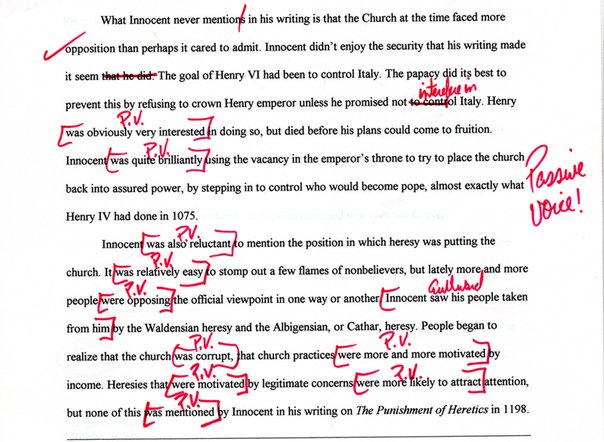
Errors in writing may irk and confuse readers, imply ignorance or negligence on behalf of the author, and have unintended consequences in the real world. For these reasons, many teachers feel compelled to try to “cure” students’ writing of errors, often by prescribing heavy doses of red ink. I am grateful for the thankless efforts these teachers make to help students become clearer, more accurate writers. But I bear bad news. There is no cure for errors in student writing. We need to be absolutely clear on this. Short of not writing, students will continue to err, no matter what we do.

Butlet me hasten to addthis bad news is also the good news.

Mini and Mighty: How the One-Minute Paper can Transform Your Teaching

sura index image

By: Tom Sura

Tom Sura is an assistant professor of English and the undergraduate writing coordinator at West Virginia University. Tom would love to know if you use one-minute papers in your courses and what discoveries they have led to. You can find him several ways: @tom_sura on Twitter, [email protected] on email, and tomsura.tumblr.com online.

One of the most powerful tools in a teacher’s toolkit—regardless of the discipline—measures just three inches by five inches. That’s right. The standard-issue index card has a remarkable power for increasing student engagement, assessing pedagogy, and providing evidence of exceptional teaching.